

A simple guide for research scholars
“Sir/Ma’am, I need a Q1 publication.”
Most research scholars hear this sentence long before anyone explains what Q1 actually means. They are told to publish in Q1, accept Q2, avoid Q3 and Q4, and check Scopus or Web of Science. The result is predictable: scholars begin chasing this quartile they do not fully understand.

Figure 1. Scholars are frequently asked to pursue quartiles before anyone explains what those labels mean.
SO, HERE IS THE QUICK ANSWER
Q1, Q2, Q3 and Q4 are four broad groups showing where a journal stands among journals in a particular subject category, ranking system and year. Q1 is the upper group and Q4 the lower group. The label belongs to the journal; it is not a quality grade automatically given to every paper published inside it.
What do Q1, Q2, Q3 and Q4 mean?
Imagine 40 journals from the same subject standing in one line. A ranking system calculates a journal-level score, places the journals in order and divides the ranked list into four broad groups.
Journal position Quartile
Journal position | Quartile |
1–10 | Q1 |
11–20 | Q2 |
21–30 | Q3 |
31–40 | Q4 |
It is like arranging 40 students according to their marks and dividing the class into four rows. The first row becomes Q1, the second Q2, and so on. In real rankings, tied scores and calculation rules may make the groups slightly uneven.

Figure 2. Quartiles divide a ranked subject group into four broad sections.
REMEMBER
Q1 means the journal is in the upper comparison group. It does not mean every paper inside it received “full marks.”
Who decides whether a journal is Q1, Q2, Q3 or Q4?
A journal or publisher does not simply choose its own official quartile. Different systems calculate journal performance using citation data.
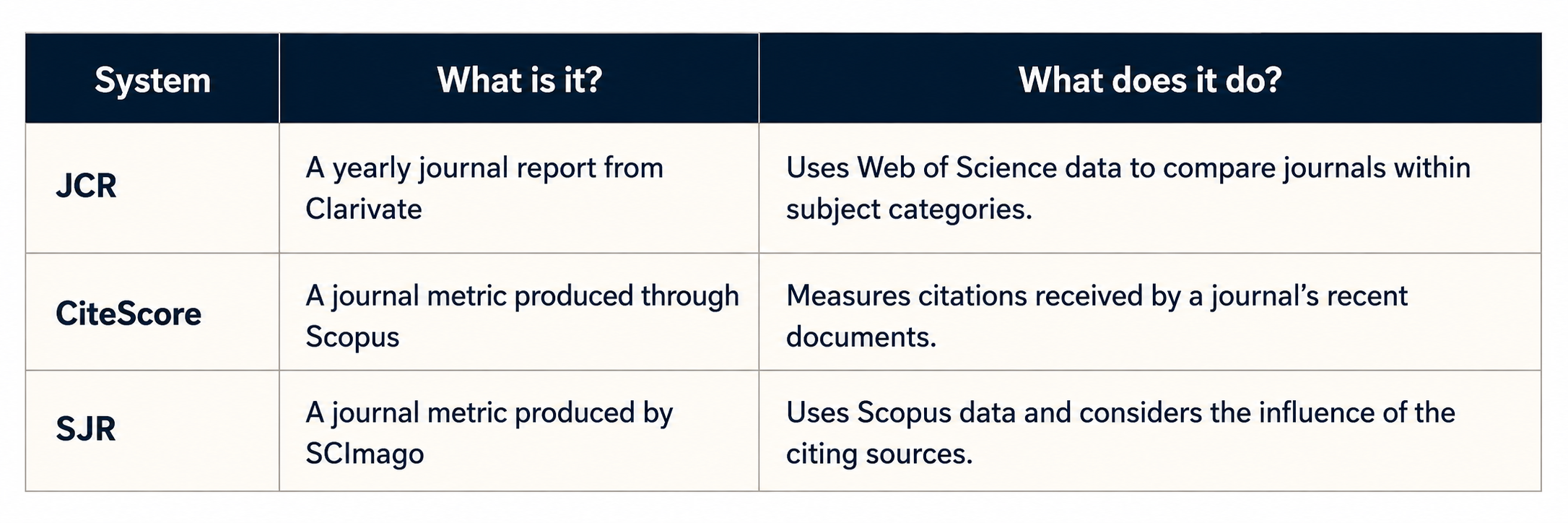
Think of three examination boards. They all assess performance, but they do not use exactly the same rules. Therefore, one journal may not receive the same quartile in every system.

Figure 3. JCR, CiteScore and SJR evaluate journals through different systems and methods.
REMEMBER
There is no single universal Q1 list.
Why can the same journal show different quartiles?
A journal may belong to more than one subject category. It could be Q1 in Management, Q2 in Information Systems and Q3 in another related category. The journal is the same, but its competitors are different.
A journal’s quartile can also change from year to year because its citations rise or fall, other journals improve, new journals enter the category, subject classifications change or the ranking system updates its coverage. Your mark may remain 70, but your class rank can fall when other students score higher.
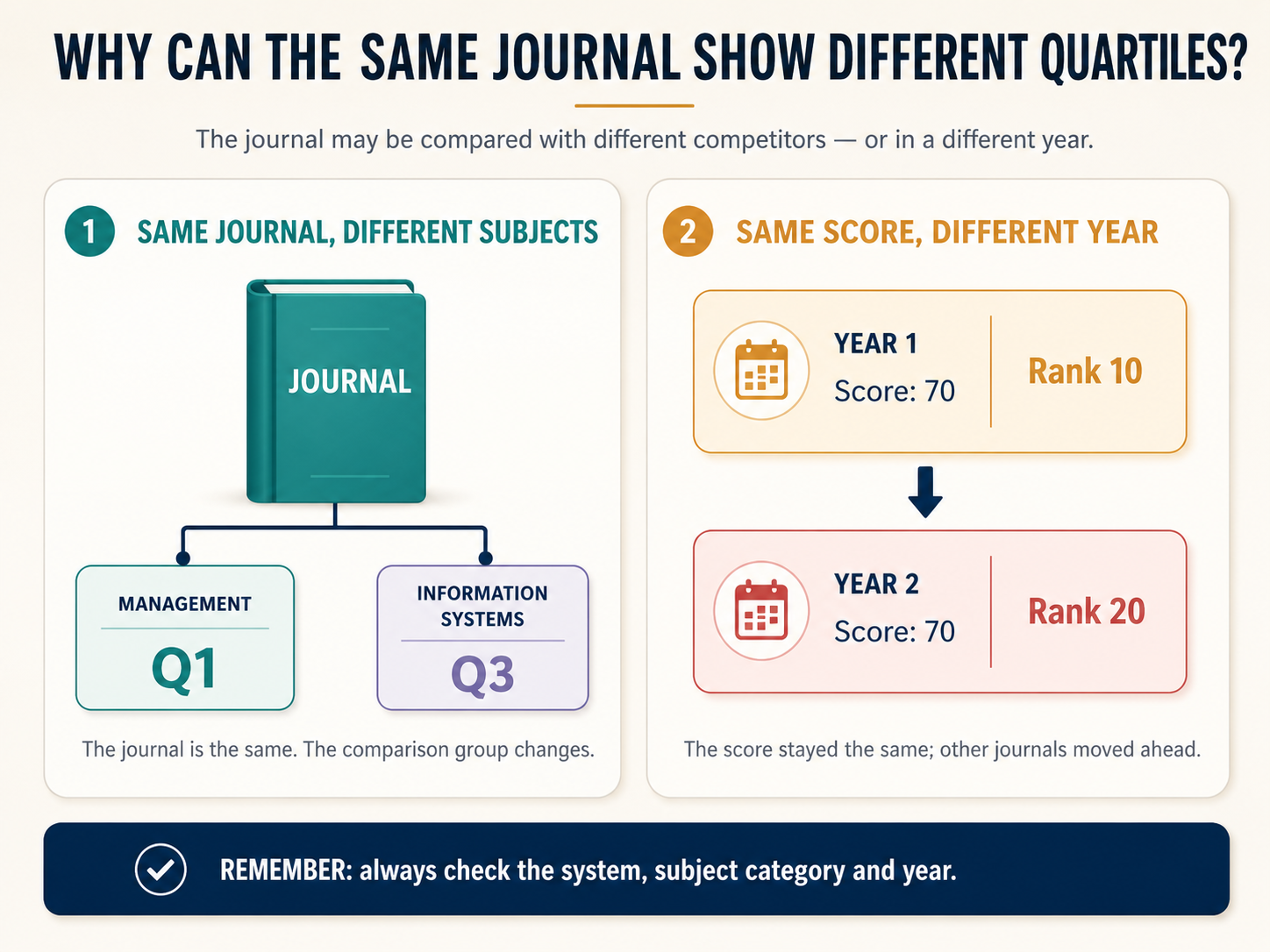
Figure 4. A journal’s quartile can differ by subject category and can change across years.
CHECK THREE THINGS
Never ask only, “Is this journal Q1?” Ask: “According to which system, subject category and year?”
Myth Busters: what scholars commonly get wrong
Quartile labels are useful, but they are often misunderstood. The biggest mistake is treating them as direct quality grades for every paper.
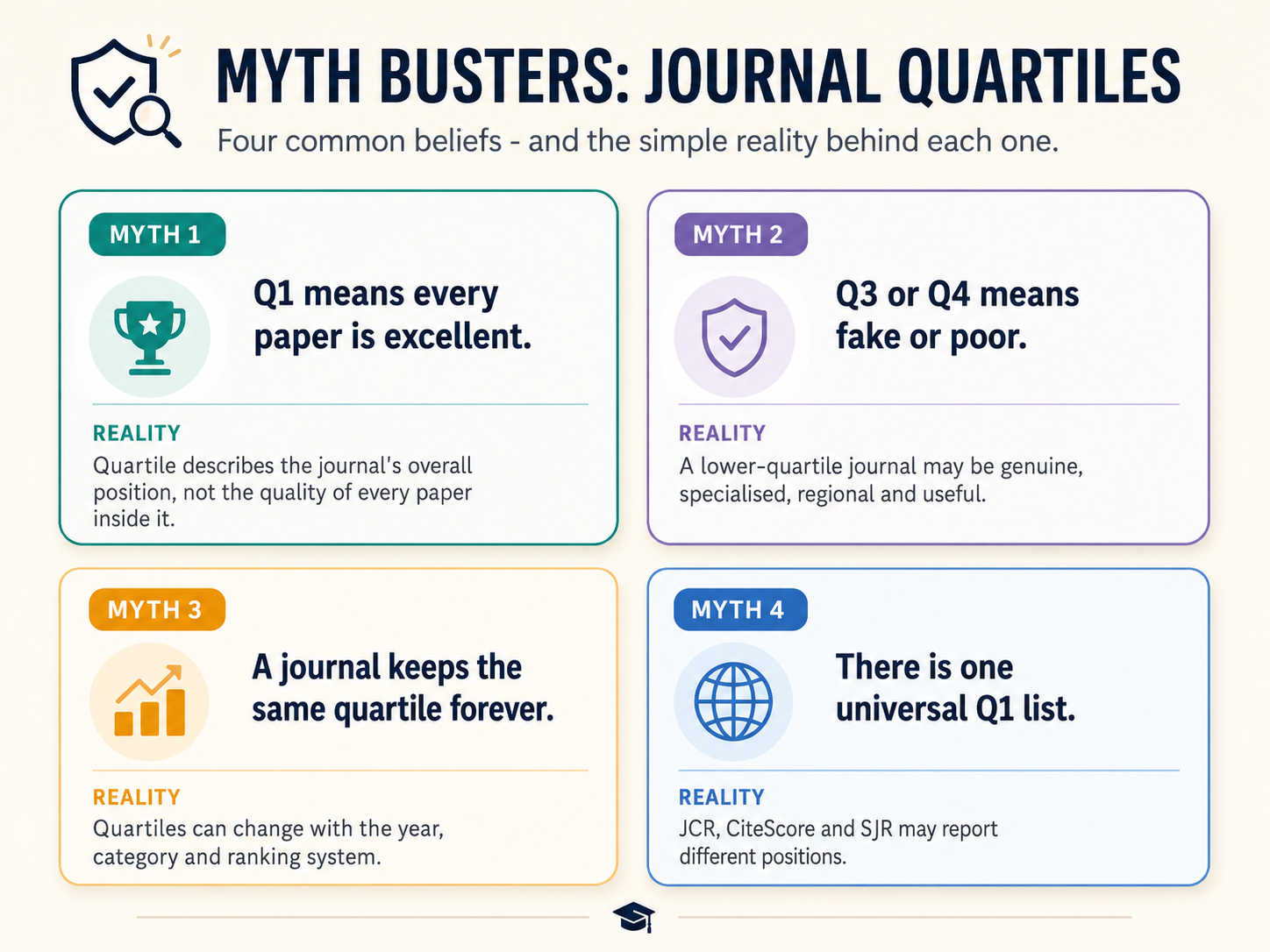
Figure 5. Four common journal-quartile myths and the realities behind them.
A lower-quartile journal may be new, specialised, regional or serving a smaller research community. A specialist shop may receive fewer visitors than a supermarket, but it can still be genuine, trusted and exactly right for a particular customer. Likewise, a Q1 journal can publish a landmark paper, an ordinary paper, a rarely cited paper or a paper that is later corrected.
THE CENTRAL IDEA
The journal has a quartile. The paper must prove its own value.
Should research scholars chase Q1, Q2, Q3 or Q4?
Do not ignore quartiles—but do not make them your entire research or publication strategy. Quartile may matter because a university, funding body, fellowship or promotion policy asks for it. Even then, it should enter the decision after the research and journal fit have been considered.
• Start with a meaningful research problem.
• Conduct the research properly and report it honestly.
• Find journals that publish similar research.
• Check whether the right readers will find the paper.
• Verify that the journal is genuine and ethically managed.
• Check fees, timeline and accepted article type.
• Confirm institutional requirements.
• Then consider the quartile.
Choosing a journal only by quartile is like boarding the fastest train without checking whether it reaches your destination. For help at the early stage, explore RE4U’s research planning support. For journal shortlisting and submission preparation, see journal selection and publication support.

Figure 6. The fastest journal route is not always the route that reaches the right audience.
USE THE RIGHT LOGIC
Use quartile as one filter—not as the steering wheel.
How can I verify a journal’s quartile?
Before accepting the statement “This is a Q1 journal,” use the Five-Check Quartile Test.
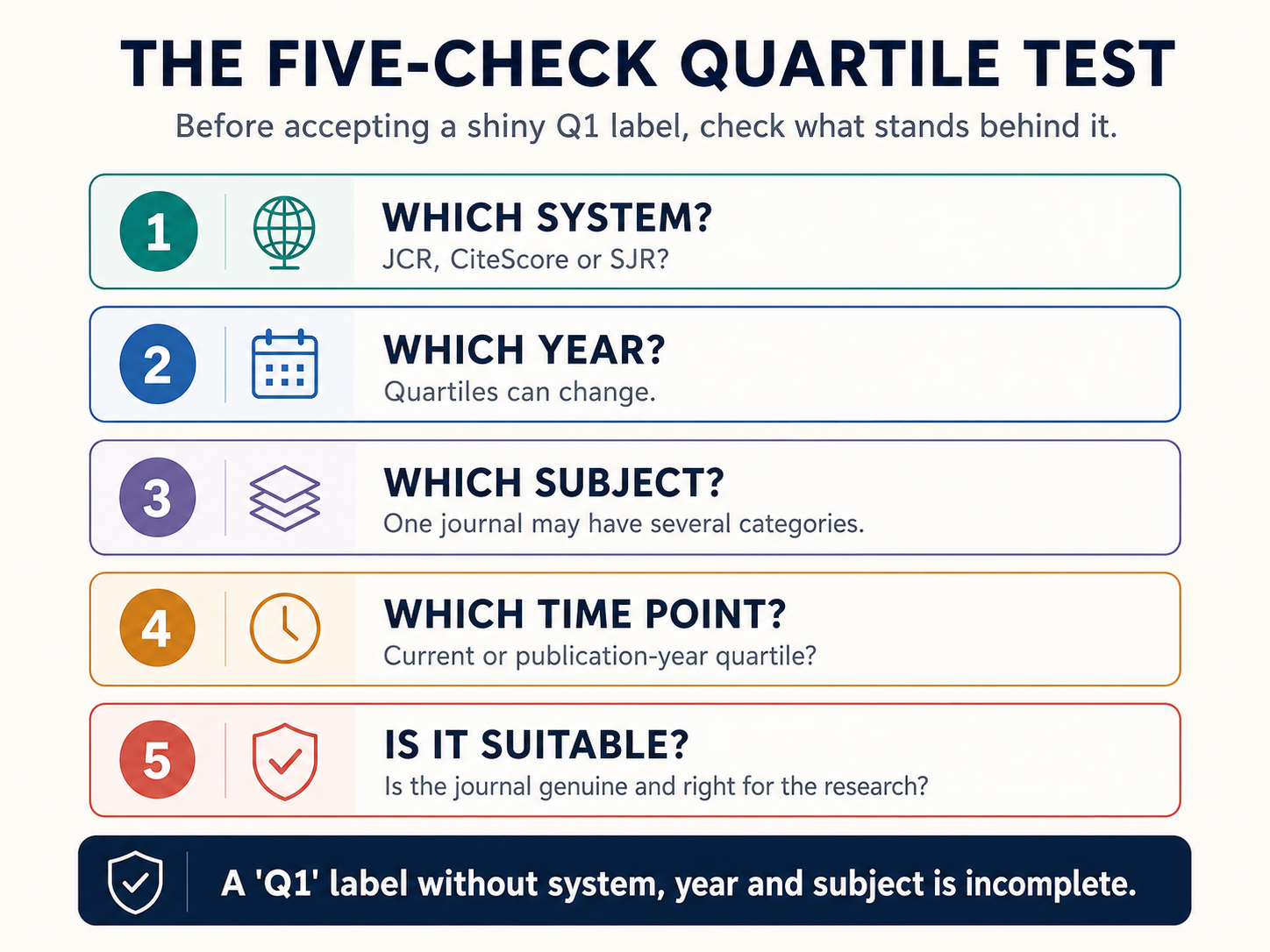
Figure 7. The Five-Check Quartile Test.
A shiny Q1 label is not enough. An unsuitable highly ranked journal can still reject a manuscript because the paper does not fit its scope. Read why papers face desk rejection and explore more practical resources in RE Minds.
Frequently Asked Questions
Are Q1 journals always more expensive?
No. Quartile and publication fees are separate. Some Q1 journals require no mandatory author fee, while journals in other quartiles may charge open-access or publication fees.
Does Q1 guarantee more citations?
No. Journal visibility may help, but citations also depend on the research question, field, usefulness, accessibility, timing and quality of the individual paper.
Can a scholar submit to a Q2 or Q3 journal?
Yes. Submission depends on the journal’s scope and instructions. Whether a quartile meets a PhD, funding or promotion requirement depends on the institution’s written policy.
Is Scopus itself a quartile?
No. Scopus is a research database. CiteScore is a journal metric calculated using Scopus data, while SCImago uses Scopus data to produce SJR-based rankings.
Final takeaway
Quartiles are useful when we understand what they measure. They describe a journal’s relative citation position in a particular ranking system, subject category and year. They cannot replace a meaningful research problem, suitable methods, reliable evidence, genuine contribution or the right journal fit.

Figure 8. Understand quartiles and use them wisely.
Explore Journal Selection Support | Research Editing Support
RE4U | Research clarity before publication strategy
Related RE4U resources
• Journal Selection and Publication Support
• Abstracts That Survive the Editor's First Read
• RE Minds Publication Resources
References
1. Clarivate. (n.d.). Journal Citation Reports. Retrieved July 14, 2026, from https://clarivate.com/academia-government/scientific-and-academic-research/research-funding-analytics/journal-citation-reports/
2. Clarivate. (2023, April 20). A primer on ties in the JCR. https://clarivate.com/academia-government/blog/a-primer-on-ties-in-the-jcr/
3. Elsevier. (n.d.). CiteScore metrics. Retrieved July 14, 2026, from https://www.elsevier.com/en-in/products/scopus/metrics/citescore
4. Elsevier. (n.d.). Scopus metrics. Retrieved July 14, 2026, from https://www.elsevier.com/products/scopus/metrics
5. SCImago. (n.d.). About SCImago Journal & Country Rank. Retrieved July 14, 2026, from https://www.scimagojr.com/aboutus.php
6. San Francisco Declaration on Research Assessment. (n.d.). Read the declaration. Retrieved July 14, 2026, from https://sfdora.org/read/