
10 Reasons Thesis Get Rejected (And How to Avoid Them)
Thesis get rejected, or sent back for major revision, when examiners cannot see an original contribution, a justified methodology, sufficient evidence, or a coherent argument. Common causes include shallow engagement with the literature, analysis that doesn't answer the research questions, conclusions that overreach the evidence, unclear writing, and integrity concerns.
But one distinction matters before anything else: a difficult examiner report does not automatically mean your thesis has failed.
Key takeaways
• "Rejection" means different things at different universities. Outcomes range from pass, to minor or major corrections, to revise-and-resubmit, to fail.
• Most serious problems are about research logic, not sentence-level language.
• Some weaknesses are fixable with revision. Others, such as no demonstrable original contribution, are fundamental.
• Check your thesis against the 10-point readiness table below before you submit.
Is "rejected" the right word?
Not always. Universities use different examination systems
Where | What examiners can recommend |
Pass, pass with changes, or revise and resubmit for examination | |
Corrections (minor or major), resubmission with a second viva, a lower degree (MPhil or MSc by Research), or fail | |
Permission to defend, or denial of it; a negative statement usually stops the examination, and the candidate can request a new one after revising | |
Viva only if both external examiners recommend acceptance; one rejection sends the thesis to an alternate examiner |
So the more useful question is:
What weaknesses make an examiner doubt that the thesis meets the required academic standard?
A 2026 scoping review in Cogent Education looked at what examiners emphasise when assessing doctoral thesis, using peer-reviewed studies published between January 2009 and June 2025. It identified six themes: contribution, literature review, approach and methodology, analysis and findings, publication, and communication and presentation. The ten reasons below follow those themes and the published criteria of the universities above.
1. Unclear original contribution
A thesis can contain extensive data, sophisticated analysis and hundreds of references and still leave the examiner asking: what has this research actually added?
UQ's PhD criteria ask whether the candidate demonstrates a significant and original contribution to knowledge. Helsinki's Faculty of Humanities requires a doctoral thesis to contain new scholarly knowledge, and tells preliminary examiners to recommend denying permission to defend if the dissertation clearly does not make an original contribution.
The problem is often not a lack of novelty but a buried contribution.
Test it. Complete these three statements:
• Previous research already knows: ______
• What remains unresolved is: ______
• This thesis contributes: ______
If you can't complete the third line clearly and specifically, your examiner may struggle too.
How to avoid it: Make the contribution visible in the introduction, literature review, discussion and conclusion, not only in one paragraph near the end.
2. A poorly defined research problem or questions
A thesis becomes hard to defend when the reader can't tell what problem it is trying to solve. Helsinki's assessment criteria cover the choice of topic, the research problem, the refinement of the research task, and the research questions. The topic should have significant information value, and the research task should be appropriately refined.
A common warning sign is a thesis that investigates too many loosely connected issues.
Alignment check:
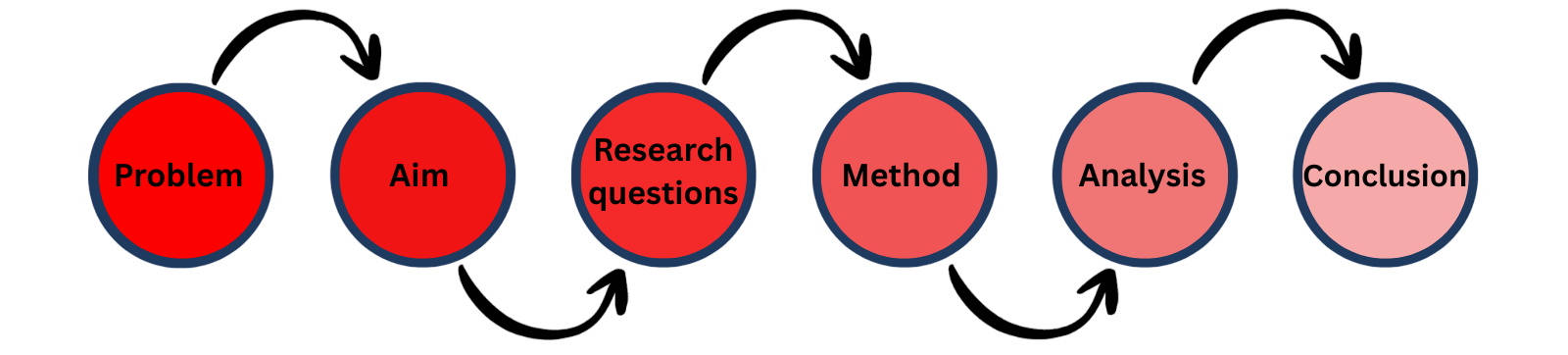
Each stage should connect to the next. If a research question has no matching analysis, or the conclusion answers a question you never formally asked, the structure needs work.
How to avoid it: Write the research questions early, then audit every chapter against them.
3. A literature review that summarises instead of critiques
A literature review isn't strong because it has many citations. UQ asks whether the candidate engages with the literature and the work of others. Helsinki expects previous research to be acknowledged but not simply repeated, and expects a critical attitude toward previous research, theories and methods. Among the serious deficiencies Helsinki lists is poor knowledge of the literature in the field.
A weak review reads: Author A found this. Author B found this. Author C found this.
A stronger review asks:
• Where do studies agree and disagree?
• Why might findings differ?
• Which methods dominate, and what limitations recur?
• What remains unresolved?
How to avoid it: Organise the review around arguments, themes, methodological differences and unresolved questions, not author-by-author summaries.
4. An unjustified methodology
Using a recognised method doesn't automatically make it the right method for your study. UQ asks whether the candidate shows advanced knowledge of research principles and methods in the discipline. Helsinki requires that methods be both presented and justified.
Before submission, ask: why this research design, this population or dataset, this sample, this instrument, this analytical technique? If the only answer is "because previous studies used it", the reasoning needs strengthening.
How to avoid it: Tie every major methodological decision back to the research question and the kind of evidence needed to answer it.
5. Insufficient evidence or research material
Sometimes the problem is more fundamental than writing. Helsinki's criteria say the material must be qualitatively relevant and quantitatively sufficient, and its guidance lists research material that is clearly too limited for a doctoral dissertation among the serious deficiencies.
What counts as sufficient differs widely. A qualitative study, a historical thesis, a laboratory experiment and an econometric analysis cannot be judged by one numerical rule. The real question is: is the evidence adequate to support the claims this thesis makes?
How to avoid it: Justify sample size, case selection, datasets, sources or experimental scope against the conventions of your discipline, and discuss this with your supervisor early.
6. Analysis that doesn't answer the research questions
Collecting data is not the same as analysing it. A thesis may contain correct statistical output, interview excerpts or experimental observations and still fail to build an argument from them. Helsinki's criteria say the analysis must be logical and consider different points of view, and the 2026 scoping review lists analysis and findings as one of six areas examiners emphasise.
Self-test: For every research question,
can you point to Evidence → Analysis → Interpretation → Answer? If you have data but can't explain what it means for the question, the analytical work is unfinished.
How to avoid it: Write a one-sentence answer to each research question, then trace it back to specific results.
7. Conclusions that go beyond the evidence
Examiners notice overclaiming. Helsinki's criteria state that the scientific significance of results and conclusions should be neither exaggerated nor underestimated.
Run a claim-evidence audit. Take each major statement in your conclusion and ask: which specific result supports this? If you can't name one, narrow the claim, qualify it, add evidence, or remove it.
How to avoid it: Use hedged, proportionate language where evidence is limited, and state the limitations of the study plainly.
8. Lack of coherence across the thesis
Individual chapters can be good while the thesis as a whole is weak. UQ asks whether there is clear and discernible coherence in the research, its arguments and its conclusions.
This matters especially in article-based thesis. Helsinki's guidance says the summarising report must show how the articles are connected and form a scientifically relevant whole. Published papers can each be strong, but the thesis still has to present one coherent contribution.
Test your thesis as one argument: Chapter 1 creates the problem → the literature shows what is missing → the methods show how you investigated it → the results provide evidence → the discussion explains it → the conclusion answers the original problem. If those links are hard to see, add signposting and revise the overall narrative.
9. Writing that hides the argument
Poor language alone usually doesn't determine the academic merit of a thesis, but poor communication can stop the examiner from seeing that merit. UQ's criteria ask whether the thesis is clearly, accurately and cogently written. Helsinki's criteria ask for a logical structure and clear language, with the main thread not obscured by a flood of information.
Helsinki's guidance also acknowledges that dissertations in a non-native language usually aren't professionally language-revised at the preliminary stage. Examiners aren't expected to fix the language, but they may comment where incorrect terminology, translation errors or structural problems hinder understanding.
So the goal isn't fancier English. It's this: can the examiner follow your reasoning without unnecessary effort? Check for overlong sentences, unclear paragraph purposes, abrupt transitions, inconsistent terminology, repetition, undefined concepts, and chapters with no clear internal structure.
How to avoid it: Edit for clarity and argument flow once the substantive research is stable. Professional academic manuscript editing can help here, from language polishing to structure and argument suggestions at the Scientific/Substantive level.
10. Research integrity or independence concerns
This is different from an ordinary writing weakness, and language editing cannot fix it. Helsinki's criteria require a thesis to abide by the principles of research integrity and the norms of research ethics. For co-authored work in article-based thesis, Helsinki requires the candidate's independent contribution to be demonstrable, with a documented report of that contribution.
Problems can include plagiarism or inappropriate reuse, inadequate attribution, undisclosed contributions in collaborative work, ethics approval gaps, questionable data handling or reporting, and an inability to separate the candidate's contribution from collaborators'.
For Indian scholars, similarity thresholds are formal. Under the UGC (Promotion of Academic Integrity and Prevention of Plagiarism in Higher Educational Institutions) Regulations, 2018, as applied in university policies:
• Up to 10% similarity: minor, no penalty.
• Above 10% up to 40%: a revised thesis must be submitted within a period not exceeding six months.
• Above 40% up to 60%: the student is debarred from submitting a revised thesis for one year.
• Above 60%: registration for the programme is cancelled.
Check your own university's policy and the original regulation, because institutions apply and elaborate these rules.
How to avoid it: Keep clear records of authorship, data handling, approvals, analysis decisions, citations and contributions throughout the project.
Fixable vs fatal: which problem do you have?
Not every weakness carries the same risk. Helsinki's guidance says a positive outcome isn't necessarily blocked by deficiencies that simple revision can remedy, additional material that can be gathered with moderate effort, or further reading that takes moderate effort. By contrast, it lists clearly limited research material, serious theoretical framework deficiencies and serious gaps in knowledge of the field among problems that can justify a negative recommendation.
Usually fixable | Often serious |
Unclear signposting, weak transitions | No demonstrable original contribution |
Overclaiming in the conclusion | Research material clearly too limited |
Thin methodological justification | Seriously flawed theoretical framework |
Inconsistent terminology | Major gaps in knowledge of the field |
This is a way to think about priorities, not a formal grading scheme. Your university's regulations decide what counts as which.
A 10-point thesis readiness check
Check | Question |
Contribution | Can I clearly state what is original about this thesis? |
Problem | Is the research problem focused and important? |
Literature | Have I synthesised and critiqued rather than merely summarised? |
Methodology | Can I justify every major methodological decision? |
Evidence | Is my evidence sufficient for the claims I make? |
Analysis | Does the analysis directly answer each research question? |
Claims | Are my conclusions proportionate to the evidence? |
Coherence | Does the thesis work as one connected argument? |
Writing | Can an examiner follow the argument easily? |
Integrity | Are authorship, data, citations and ethics transparent? |
If several answers are uncertain, the fix isn't necessarily to write more. It's to identify what kind of problem you actually have.
What to fix first
A useful order:
1. Research design or evidence problems
2. Contribution and research-question problems
3. Analysis and claim alignment
4. Thesis coherence and structure
5. Clarity and language
6. Formatting and final presentation
Polishing sentences before resolving a methodological or structural problem creates rework.
Can professional editing prevent thesis rejection?
Editing can improve clarity, flow, coherence, terminology and presentation. It cannot create originality, repair inadequate data, or make an unsuitable method valid. A good academic editor improves how clearly your research is communicated without changing your evidence, findings or intellectual ownership.
ResearchEditing4u's Academic Manuscript Editing ranges from standard language editing to Scientific/Substantive editing, which adds structure and argument suggestions. Editing never guarantees acceptance or examination outcomes.
Beyond editing, RE4U offers personalized scholar consultations to guide you through thesis development, ensuring your research rationale, contextual relevance, and chapter flow remain logically coherent.
Frequently asked questions
Why does a thesis get rejected?
A thesis can be rejected, or sent back for major revision or resubmission, when it doesn't meet the institution's criteria. Common concerns are originality, engagement with the literature, methodology, evidence, analysis, coherence, justified conclusions, writing quality and research integrity.
Can a PhD thesis be rejected after submission?
Yes, depending on the institution's regulations and how serious the deficiencies are. But many systems also provide corrections, revise-and-resubmit or resubmission pathways before a final fail. Edinburgh and UQ, for example, both publish such outcomes.
Can a thesis be rejected because of poor English?
Poor language alone isn't the same as weak research. But writing that obstructs understanding can affect examination, because examiners must be able to follow the argument, evidence and conclusions. UQ and Helsinki both include clarity of writing among their criteria.
Is lack of novelty enough to fail a PhD thesis?
Original contribution is central to doctoral examination. At Helsinki's Faculty of Humanities, preliminary examiners are told to recommend denying permission to defend if the dissertation clearly doesn't make an original contribution to knowledge.
What plagiarism percentage is allowed in a PhD thesis in India?
Under the UGC 2018 regulations as applied in university policies, similarity up to 10% carries no penalty. Higher bands lead to revision, debarment from resubmission for a year, or cancellation of registration. Check your own university's policy.
Final takeaway
A thesis usually becomes vulnerable not because of one badly written sentence, but because the research logic breaks somewhere: Problem → Literature → Method → Evidence → Analysis → Contribution.
Before submission, don't only ask "Is my thesis finished?" Ask: can an independent examiner see why this study was necessary, trust how it was conducted, follow the argument, and identify what it contributes? That is a stronger definition of submission-ready.
Sources
• University of Queensland, criteria for external examiners of candidates without oral examination
• University of Helsinki, Faculty of Humanities, instructions for the examiners of doctoral dissertations
• University of Edinburgh CAHSS, corrections and resubmission
• Cogent Education (2026), What examiners emphasize in their assessment of doctoral thesis: scoping review
• UGC (Promotion of Academic Integrity and Prevention of Plagiarism in Higher Educational Institutions) Regulations, 2018